Children & Sexual Violence: What You Need to Know
Child sexual abuse is happening in homes, schools, online spaces, and communities across the country. Prevention starts with understanding the risks—and acting to stop them.
Children rely on adults, institutions, and technology platforms to protect them. When those systems fail, the harm can last a lifetime. That’s why RAINN works to prevent child sexual abuse, strengthen laws, support survivors, and hold perpetrators accountable.
What is child sexual abuse?
‼️ For younger children: Child sexual abuse includes sexual activity, sexual contact, or sexual exploitation involving a child.
‼️ For older teens: Sexual abuse can also occur when there is coercion, force, manipulation, exploitation, or a significant age, power, or developmental difference.
Laws about consent and age vary by state, especially for older teens. But a relationship, age gap, or lack of physical force does NOT make abusive sexual activity okay.
Why Child Sexual Abuse Demands Urgent Attention
Child sexual abuse is not rare. It affects children of every identity and background.
Abuse may include:
- Sexual contact or exploitation by an adult.
- Grooming behaviors that build secrecy and dependency on the abuser.
- Sexual abuse by a family member (incest).
- Child-on-child sexual abuse (COCSA).
- The production or distribution of child sexual abuse material (CSAM).
- Online exploitation and tech-enabled sexual abuse (TESA).
Many children are harmed by someone they know and trust. Abuse often involves manipulation, coercion, and silence rather than force.
Understanding how child sexual abuse happens is the first step toward prevention.
“I was a child trying to survive trauma, and no one saw it. No one asked the right questions. No one noticed the shifts in my behavior, my mental health, or my ability to function. I was labeled as difficult or distracted, not someone in pain.”
– Caitlin, survivor
Survivors Speak Out About Child Sexual Abuse
Liz’s Story: “Silence and lack of protection left me vulnerable to harm.”
I was raised in a deeply religious household where the voices of women and children were often minimized or ignored. From a young age, I was taught about topics like sex and abstinence, but always through the lens of obedience—especially to the man of the house. I was never told I had the right to say no, never encouraged to speak up for myself. Autonomy wasn’t something I was taught to value; instead, compliance was seen as a virtue, especially for girls.
That silence and lack of protection left me vulnerable to harm, and the adults around me missed—or chose to ignore—clear signs that something was wrong. I remember feeling as though I was crying out in every way I knew how, but no one wanted to hear it. Even when outside authorities eventually got involved and accountability was enforced, I still carried the shame of what had happened. Instead of comfort, I was met with blame, even from those closest to me. I was a child, yet I was treated as though I had done something wrong.
No one ever told me I wasn’t at fault. No one reassured me that I was still worthy of love, safety, or healing. I was left to carry the weight of it all on my own. Because of the strict beliefs in my home, seeking therapy or medical support was frowned upon. Mental health was not something we talked about, and asking for help was viewed as a sign of weakness or lack of faith. So I buried everything, unsure of how to process what I had lived through.
As I got older, I searched for escape in places that only deepened my pain. I found myself in unhealthy relationships and used substances to cope, still unable to set boundaries or advocate for myself. I had not been taught to value my body, my voice, or my well-being. I confused control and manipulation with love, believing that hurt was just part of being cared for. It took years of hard lessons to even begin to believe that I was worth more than that—that I deserved respect, tenderness, and peace.
Healing is an ongoing process, and I still struggle to express my needs and hold boundaries. Some days are easier than others. But each day, I take small steps toward unlearning the messages that shaped my early life. I’m beginning to understand that my voice matters and that I am allowed to protect my peace. It’s not a straight line, but it’s a path I walk with growing confidence and self-respect—and that, in itself, is progress.
– Liz
Tim’s Story: “I had never much liked or trusted cops until that night.”
I finally went to the police and reported my abuse after I heard he was in jail for kissing a child who lived next door to him. I was 35 years old.
The process was lengthy, but worth it. It was the hardest thing I’ve ever done.
It started with a phone call to the police in the town where most of the abuse took place—his hometown. “He” was my step-uncle.
I was asked to come to the police station, where I spoke with the officer on duty and a lady from CPS [child protective services].
The questioning seemed to last a lifetime. The more questions they asked, the more it surfaced. Things I had spent my whole adulthood trying to forget. They even had me draw a picture of his penis.
I was then asked to go home and write a police report, which I did… 18 pages. I thought I was going to lose myself a few times while writing it. The more I wrote, the more I remembered, and the more I remembered, the more I felt dirty and disgusting. (I had tried to kill myself with alcohol for many years, but at this time, I was about 10 years sober from alcohol, and everything felt so raw and present.)
After I turned in the police report, I didn’t hear anything from them, so I thought maybe they didn’t think there was enough evidence or the statute of limitations had run out… so I just tried to block it all out again.
Then, about 9 months later, I got a phone call from the state police that he was out of jail, and I flipped. After they got me calmed down, they explained their plan to me:
They wanted him to get out so I could go visit him while wearing a wire and try to get him to admit something incriminating. They believed my police report, but didn’t think it was enough to secure a guilty verdict. So I did it: wired up with them sitting down the street and went into his house.
He lived with his mother, my step-grandmother, and I couldn’t get him separated from her to talk, so they finally gave me the sign to abort the mission. They said they had one more idea and asked me to meet them at the police barracks in a couple of days, and we’d try a phone tap.
I had never much liked or trusted cops until that night.
I got him!!
I saw determination and professionalism from these two policemen like I had never seen before. They were from the homicide unit, but because of my 18-page police report, the local police, state police, and DA wanted the best they had on the case.
I think about them often, and every time I pass those barracks, I can still see one of them jumping up and down with his fist in the air, mouthing, “We got him!! We got him!!” They arrested him that night.
[He was sentenced to] 137 years!!!!!!!!!!!!!!!!!!!!!!!!!!!!!!!!!!!!!!!!!!!!!!!!!!!!!!!!!!!!!!!!!!
– Tim
Diane’s Story: “Healing came in jagged, painful increments.”
Trauma shaped every dimension of my life, beginning with how I saw myself. I internalized the abuse as proof that something was deeply wrong with me—a fundamental flaw that made me unworthy of love or protection. I learned early on to dissociate, to survive by disconnecting from my body and emotions. Shame became my constant companion, whispering that I was damaged beyond repair and unlovable. I became a perfectionist not out of ambition but out of a desperate need to prove my worth and to control the chaos inside me.
In school, friendships, relationships, and at work, I struggled to feel good enough, safe, or connected to others. I lived in a state of hypervigilance, constantly scanning for danger. I not only disappeared into myself, but I also had to check mirrors to see whether I existed at all. I lived with a chronic sense of disorientation — of being present but not really there.
Relationships, especially romantic ones, were fraught because my “No” was taken away from me as a pre-schooler. I expected harm from those closest to me and was far more internally reactive than I realized. It took me decades to recognize how trauma shaped my choices, especially why I seemed to always attract narcissists. I took their love-bombing as genuine, only to be left disappointed and confused when it all vanished.
I battled anxiety and impostor syndrome, often struggling with authority, especially when I sensed any hint of manipulation or gaslighting — echoes of my childhood. I was hard-working and ambitious, but also easily overwhelmed, particularly by conflict or betrayal, and had no idea how to build either a career or healthy relationships. Trauma wasn’t so much what happened to me; it was what lived in my nervous system, shaping how I moved through the world. The one intentional positive choice I made was to break the generational cycle so my children did not suffer as I did.
Healing didn’t come in a single moment, but in jagged, painful increments — through therapy, writing, reparenting myself, and finally, through the brutal revelation that my mother had known all along. That betrayal undid me and unraveled my life, but it also forced a reckoning. I began to reclaim my voice, my memories, and my right to exist without apology. I don’t pretend that trauma is ever truly ‘over,’ but I have learned to live with its echoes, not under its rule. Now I can feel my emotions and allow them to flow through me. My body has indeed kept the score, but now I am releasing old trauma. Knowing and sharing my truth, finally and fully, has been my liberation.
~ Diane Sherlock
Is prevention possible?
Experts generally consider child sexual abuse a preventable public health problem.
This means the frequency of child sexual abuse can be reduced through changes within families, youth-serving organizations, communities, technology environments, and policy.
The CDC frames prevention around creating safe, stable, nurturing relationships and environments.
Prevention works best when we stop placing the burden on children and instead build protective environments and adult accountability—at home, in institutions, and online.
Get Informed About the Issues
Child Sexual Abuse (CSA)
Child sexual abuse includes sexual contact with or sexual exploitation of a minor. Perpetrators of CSA may be adults or other children.
CSA may involve:
• Physical sexual contact.
• Exposure or exploitation.
• Being forced to watch or participate in sexual acts.
• Being photographed or recorded in sexually explicit ways.
• Online manipulation or coercion.
Child Sexual Abuse Material (CSAM)
Every explicit image of a minor is evidence of abuse.
Child sexual abuse material—often referred to as CSAM (“see-sam”)—includes images and videos that are often widely distributed online. These images and videos are not “pornography.” They document crimes committed against children.
The rise of digital platforms and encrypted messaging has accelerated the production and spread of CSAM. Artificial intelligence tools are now being used to generate sexual images of minors.
Grooming: How Abuse Often Begins
Many cases of child sexual abuse begin with grooming.
Grooming is a deliberate process in which a perpetrator builds trust with a child (and often with caregivers) to create secrecy, dependence, and control.
The warning signs of grooming may include:
• Giving gifts or special privileges.
• Isolating the child from peers or family.
• Gradually crossing physical boundaries.
• Encouraging secrecy.
• Excessive digital communication.
Understanding grooming behaviors helps adults intervene earlier.
Child-on-Child Sexual Abuse (COCSA)
Child-on-child sexual abuse occurs when one minor coerces, manipulates, or forces another minor into sexual activity.
These cases are complex and require:
• Trauma-informed response.
• Age-appropriate intervention.
• Education about consent and boundaries.
• Support for both the child who was harmed and the child who caused the harm.
Ignoring a child’s problematic sexual behavior does not make the abuse disappear. Early intervention is necessary to reduce long-term harm.
When Love Isn’t Love: Grooming & Teenage Vulnerability
A survivor shares how some predators disguise grooming and child sexual abuse as love—and how adults can step in to stop harm and hold offenders accountable.
“I never thought of myself as a child when my abuse happened, even though I was skinny, glasses and braces-clad, and only 16 years old. I was driving, had a job and an internship, and my parents treated me as though I was just as responsible as they were. We never had conversations about boundaries or consent.
– Anna, survivor of sexual abuse by a teacher
“When you’re treated like an adult before you are even close to being one, I think it makes it easier for an abuser to make you feel as though what is happening is consensual and that you are complicit.”
Sexual Abuse by a Family Member
Sexual abuse by a family member is sometimes called “incest.” It can involve parents, siblings, extended family, or others living in the household.
These cases are particularly difficult because they often involve:
• Power imbalances.
• Emotional manipulation.
• Financial dependence.
• Threats or coercion.
Children may feel loyalty, fear, or confusion that prevents them from telling anyone what is happening.
Online Exploitation & Tech-Enabled Abuse of Minors
Technology can expand connection—but it can also expand harm. Children today face risks that previous generations did not.
Online exploitation may include:
• Sextortion.
• Coercion through gaming or social media platforms.
• AI-generated sexual images.
• Live-streamed abuse.
• Harassment that targets the child’s unique vulnerabilities.
Children Face Increased Risk
Some children are uniquely vulnerable to the risk of sexual abuse, including:
- Children with disabilities.
- Youth who are “different.”
- Kids experiencing homelessness.
- Youth in detention settings.
- Children in foster care.
Frequently Asked Questions About Child Sexual Abuse
How common is child sexual abuse?
Child sexual abuse affects kids in every country and community—even “safe” ones. The majority of CSA cases go unreported, which makes prevention and education critical.
What should I do if I think a child is being groomed?
Trust your instincts and take concerns about grooming seriously. Document the worrying behaviors and report your suspicions to the appropriate authorities or child protective services.
Can kids sexually abuse other kids?
Yes. Child-on-child sexual abuse (COCSA) is not uncommon. The perpetrator is often the victim’s sibling or another child living in the home. Both children require urgent trauma-informed intervention.
Where can survivors get help?
Get Help NowGet Help Now
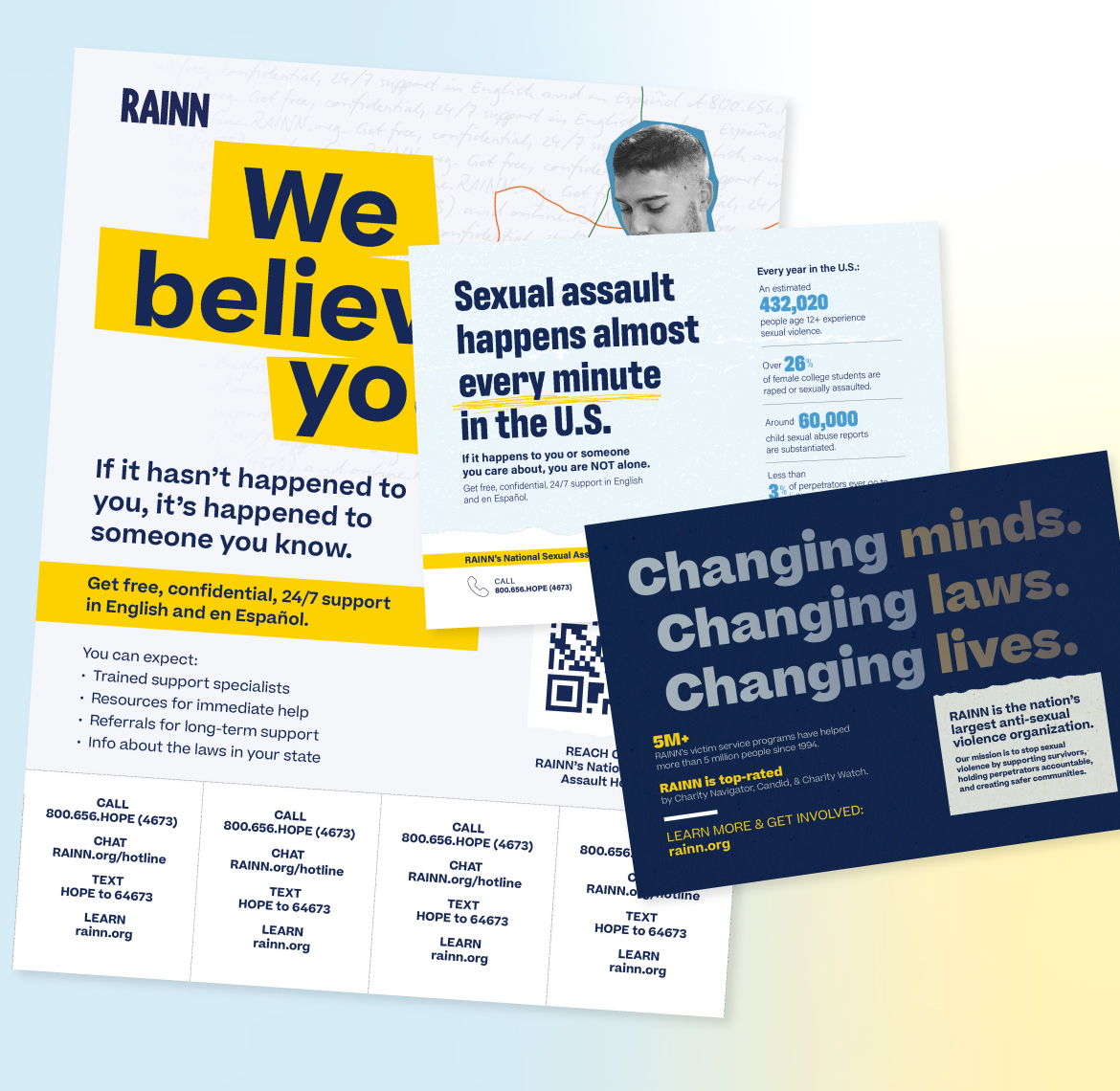
Free, confidential support is available 24/7 through RAINN’s National Sexual Assault Hotline.
• Call 800.656.HOPE (4673)
• Chat at hotline.rainn.org
• Text “HOPE” to 64673
RAINN’s series, “Redefining Resilience”, helps survivors of CSA understand trauma, move past shame, disclose to loved ones, manage memories, and form trusting relationships.
How You Can Protect & Help Kids, Tweens, & Teens
1. Learn the Warning Signs
✅ When we understand the issues, we can prevent harm, protect kids, and respond effectively when a child is abused.
2. Talk to Children About Boundaries
✅ Help reduce risk by having regular, age-appropriate conversations with kids about boundaries and consent.
3. Report Suspected Abuse
‼️ If a child is in immediate danger, call 911.
‼️ Report suspected child exploitation to the National Center for Missing & Exploited Children’s CyberTipline.
4. Support Survivor Services
✅ Contribute to prevention and support programs that protect children nationwide.
Every child deserves safety and support.
Your contribution is critical to fight back against child sexual abuse, provide 24/7 hotline support, and support survivors everywhere.
Protecting Children Is a Collective Responsibility
Child sexual abuse is preventable—but only if communities act.
When adults understand the risks, demand accountability, and support survivor-centered policies, children are safer.
Explore the resources. Share the information. Support prevention.
How RAINN Is Working to Protect Children
RAINN works across prevention, justice, and healing initiatives to address child sexual violence. We:
- Analyze trends to identify emerging risks.
- Advocate for bipartisan legislation protecting minors.
- Provide education to caregivers and communities.
- Support survivors through free, confidential services.
- Collaborate with technology companies and policymakers to address online exploitation.

If you or someone you know has experienced sexual assault, you are not alone. RAINN’s National Sexual Assault Hotline offers free, confidential, 24/7 support in English and en Español.
Join Our Community
Join the Fight for a World Free from Sexual Violence
Sign up for inspiring stories, important updates from RAINN, and tools to take action in your community.