Strength To Care
Together, we can prevent harm, provide support, and stop sexual violence for good.

One person with the Strength To Care can change the world.
Do You Have the Strength To Care?
When we show up, speak out, and step in with everyday acts of care, we create safer communities and support survivors of sexual violence—together.
3 Ways To Show Your Strength To Care
#1 Show Up
| Presence is prevention. Care starts with being there.
To be clear, showing up isn’t always easy. It often means choosing presence over convenience—listening without getting distracted, or making time when you’re already busy. But showing up matters. Research consistently shows that social connection and supportive relationships reduce isolation, increase safety, and lower the risk of ongoing harm—especially for people experiencing abuse or trauma. (1)(2) Showing up allows us to recognize warning signs of harm, distress, or abuse—signs that may go unnoticed if no one is around to witness what’s happening. Showing up can be simple: listening without judgment, offering comfort, giving someone a sense of safety, or reminding them they matter. When people feel supported, they are more likely to:
Showing up builds trust, and trust makes way for safety and healing. |
#2 Speak Out
| Silence enables harm. Speaking out creates change.
It’s true that speaking out can feel uncomfortable—or even risky. It can draw attention we didn’t ask for or make us worry we’ll be seen as difficult. But speaking out is one of the most powerful tools we have to prevent harm. Studies on prevention and social norms show that challenging harmful beliefs and sharing accurate information help shift attitudes and reduce tolerance for abuse. (3)(4) We speak out to interrupt misinformation, name harmful behavior, and remind people that violence is never acceptable. We speak out to tell survivors they are believed, they are not alone, and help is available. We speak out because silence allows myths, stigma, and victim-blaming to spread unchecked. Every time we challenge a harmful joke, correct a false assumption, or share a trusted resource, we help reshape the culture that allows sexual violence to persist. (3)(4) Speaking out doesn’t require perfection; it requires courage and care. |
#3 Step In
| Stepping in can feel scary—and it can prevent lasting harm.
Most people hesitate because they don’t want to make things worse, draw attention, or put themselves at risk. But evidence from bystander intervention research shows that early, safe intervention can stop harm before it escalates—and significantly reduces the likelihood of repeated abuse. (5)(6)(7) Stepping in is how we show that harmful behavior won’t be ignored or enabled. It can take many forms:
Sometimes it means reporting what you witnessed or setting boundaries to protect someone who may not be able to protect themselves—online or offline. You don’t have to confront an abuser directly to make a difference. Safe intervention sends a powerful message: We see what’s happening. You’re not alone. This behavior isn’t tolerated. Small acts of care, taken at the right moment, can prevent serious harm and create safer communities for everyone. |
Strength To Care Resources
Learn to show up, speak out, and step in with Strength To Care bingo cards.
Right-click to save, share, and take action.
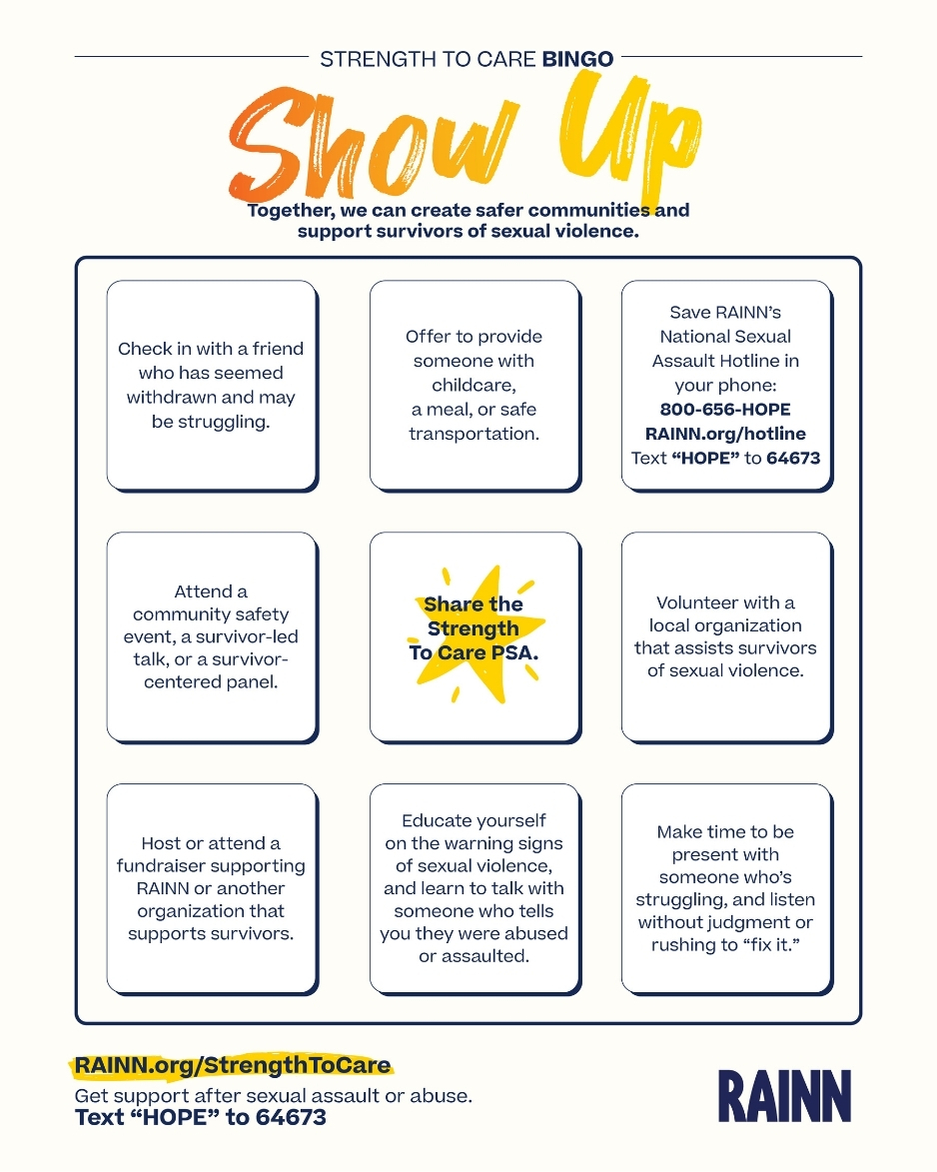
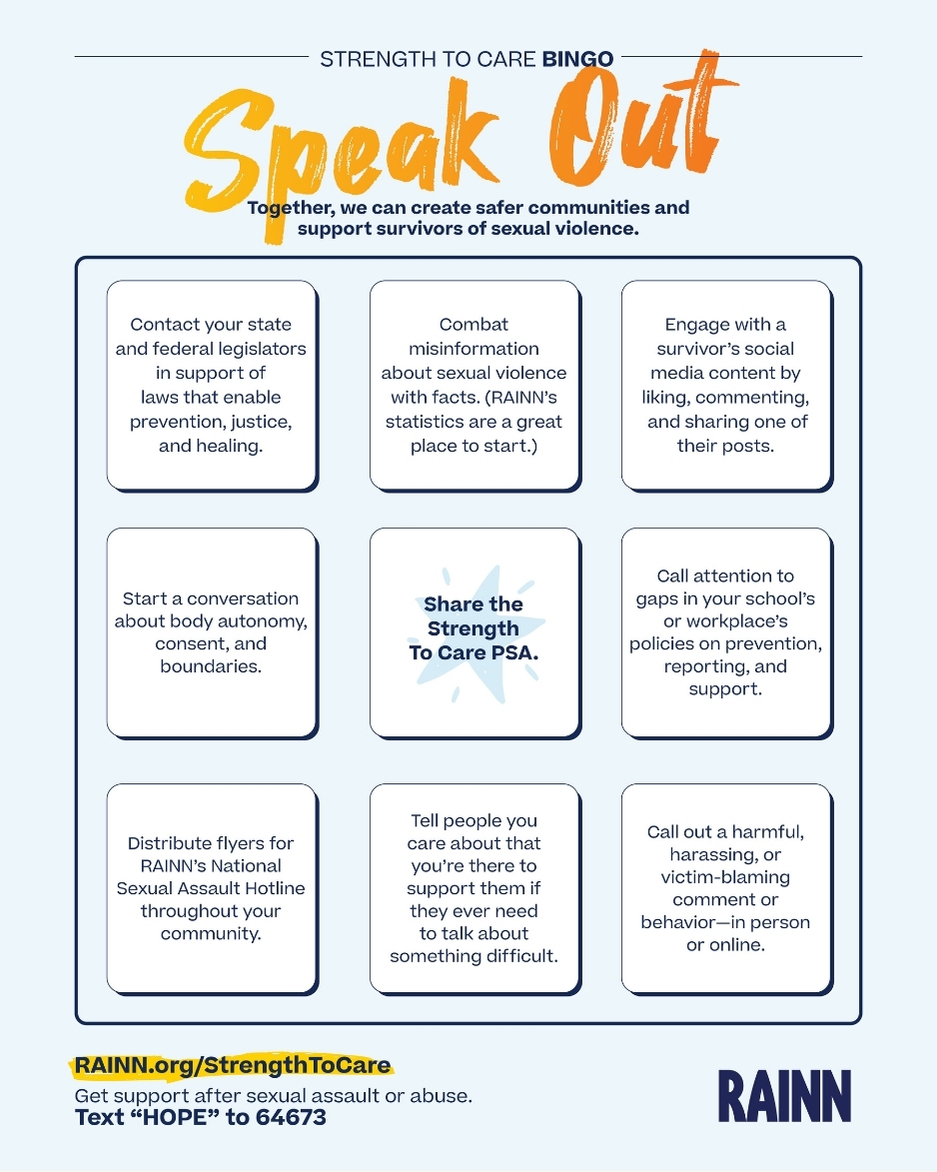
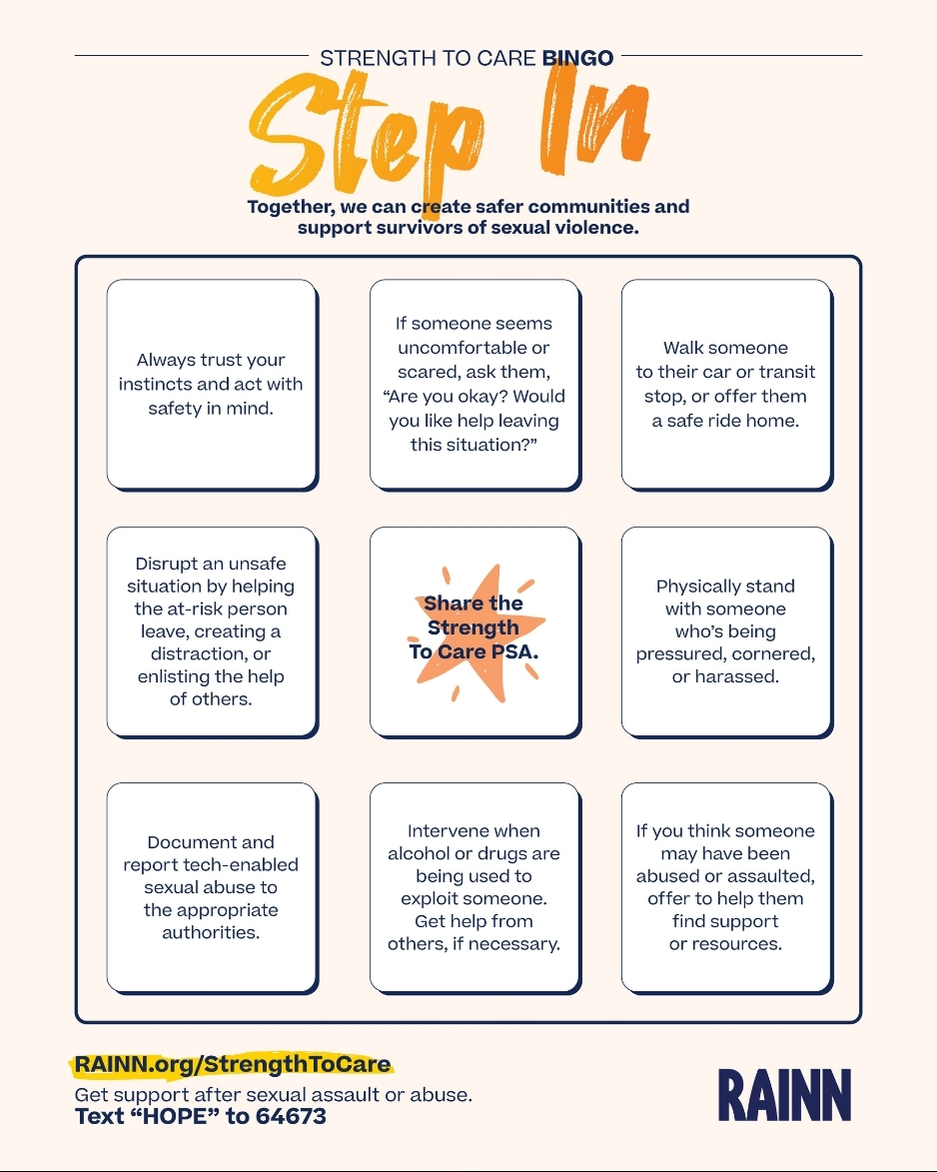
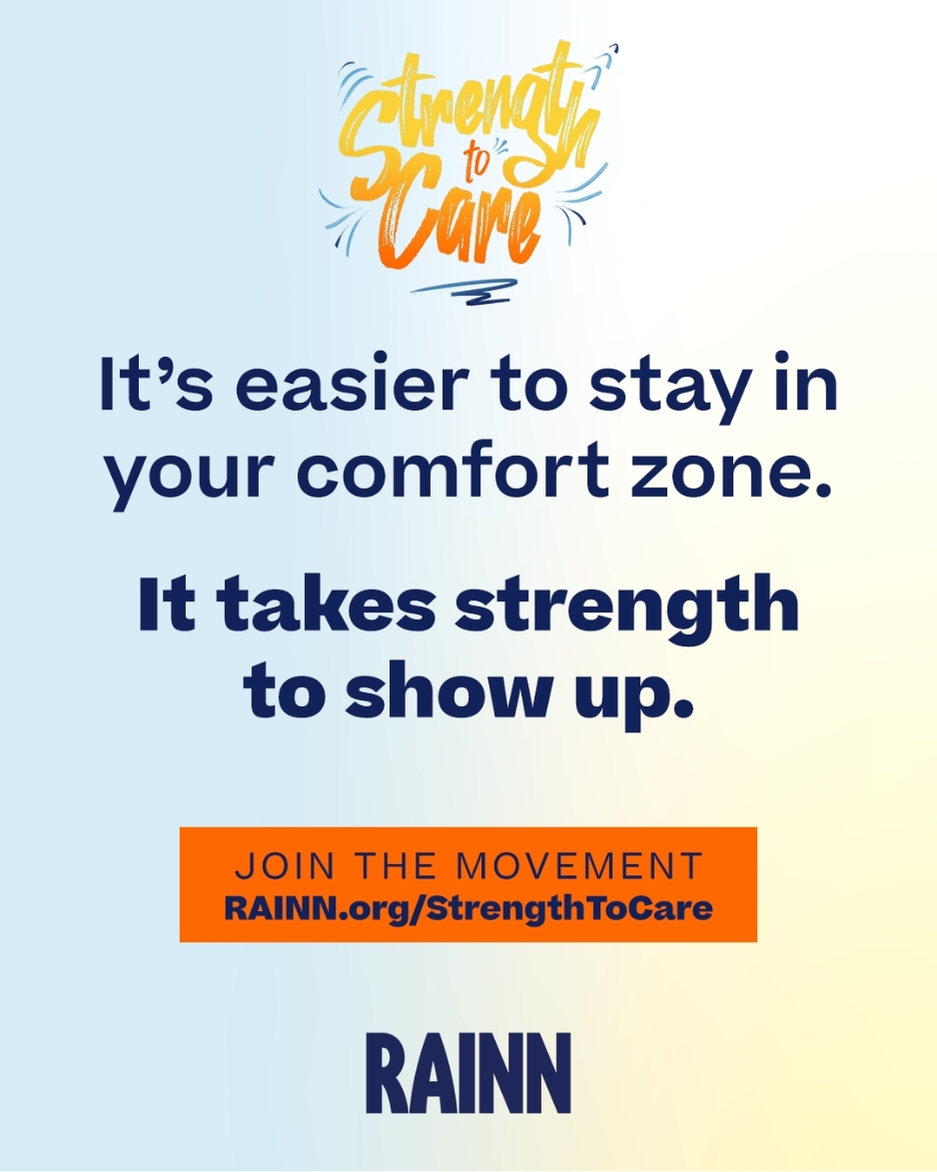
Inspire others to show up, speak out, and step in with Strength To Care social graphics.
Click to save, share, and take action.
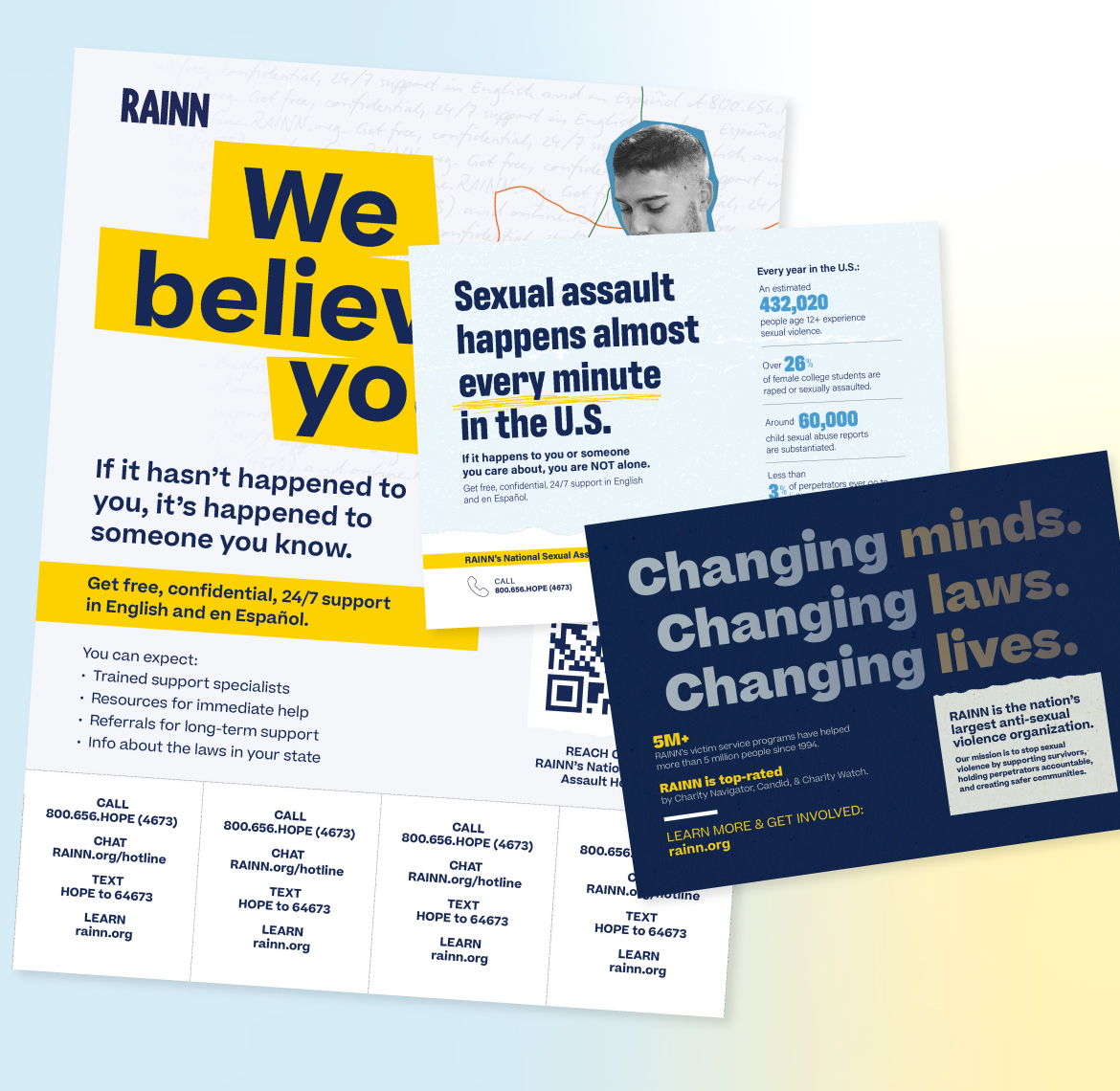
Community Outreach Toolkit
Free, downloadable resources and digital graphics for allies and advocates.
Join the Movement
Join the Fight for a World Free from Sexual Violence
Join the RAINN Courage Community to receive opportunities for learning, allyship, advocacy, and connection with other compassionate champions.
If you or someone you know has experienced sexual assault, you are not alone. RAINN’s National Sexual Assault Hotline offers free, confidential, 24/7 support in English and en Español.
Join Our Community
Support a future free from sexual violence.
Your contribution is critical to staff our hotline and support survivors.

CITATIONS
(1) Quinlan-Davidson et al., PLOS ONE: social support moderates the impact of violence on mental health outcomes.
https://journals.plos.org/plosone/article?id=10.1371/journal.pone.0258036 PLOS
(2) Holt & Espelage, Scarpa et al. — studies show social support relates to fewer negative health outcomes.
https://www.sciencedirect.com/science/article/pii/S0191886925002880?via%3DihubScienceDirect
(3) CDC Sexual Violence Prevention Resource for Action: evidence-based prevention includes changing societal conditions and norms that influence risk and protective factors.
https://www.cdc.gov/violence-prevention/media/pdf/resources-for-action/SV-Prevention-Resource_508.pdf CDC
(4) Green Dot research shows that interventions reducing acceptance of violence and increasing bystander action are linked to lower perpetration.
https://stacks.cdc.gov/view/cdc/88007/cdc_88007_DS1.pdf CDC Stacks
(5) University of Illinois Chicago (UIC) overview of bystander intervention encourages safe action when situations may lead to harm.
https://sexualmisconduct.uic.edu/education-and-training/bystander-intervention/ sexualmisconduct.uic.edu
(6) Coker et al., PMC: data show bystander programs can reduce acceptance of violence and increase safe intervention behaviors.
https://www.ncbi.nlm.nih.gov/pmc/articles/PMC6422968/PMC
(7) UTEP overview of bystander strategies.
https://www.utep.edu/initiatives/dot/about/green-dot-programs.html University of Texas at El Paso